May is not the quiet month before Pride anymore. Publishers figured this out a few years ago. June had become too crowded, so the calendar shifted, and queer titles started arriving earlier. This May, eleven books worth your time are landing before June 1. Fiction, nonfiction, YA, memoir, translation. A Booker Prize winner. An Oprah’s Book Club selection. Two translations of French autofiction. A trans debut from a Canadian independent press. An annotated edition of the most challenged book in America.
The range is not accidental. Queer publishing has grown large enough that a single month can hold this much variety without any of it feeling like overflow. These are the ones we think deserve your attention, ordered by publication date.
May 5
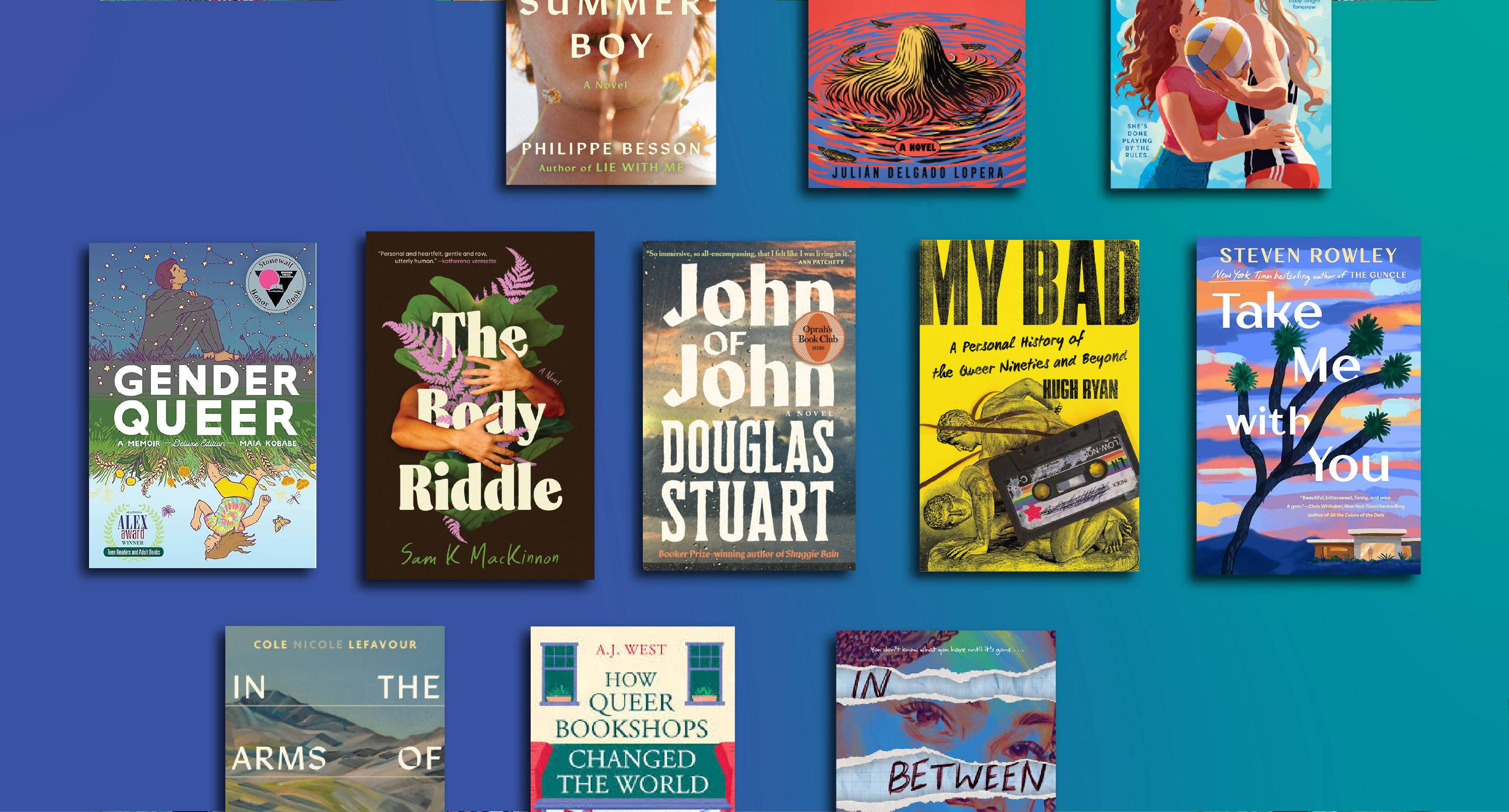
Gender Queer: The Annotated Edition — Maia Kobabe
Oni Press
Identities: Nonbinary, asexual
America’s most challenged book for three consecutive years is back in a 40-page expanded hardcover edition with commentary from 16 contributors: comics scholars, queer and trans cartoonists, and people who appear as characters in the original memoir. Kobabe wrote Gender Queer to explain eir nonbinary, asexual identity to eir own family. It became something much larger than that. This annotated edition arrives with a foreword by ND Stevenson, new cover art, and annotations that contextualise both the creation of the work and the cultural firestorm it ignited. Publishing this now, when book bans are at a record high, is its own statement. For readers who already know the book, this edition offers new depth. For those who have not picked it up yet, there has never been a better version to start with.
Best for: Anyone who wants to understand why this book matters and why its opponents are so afraid of it. Educators and librarians who want the most complete version of the text.
May 7 (ebook)
How Queer Bookshops Changed the World — A.J. West
Simon & Schuster
Identities: Gay author; broad LGBTQ+ history spanning lesbian, gay, and queer spaces
The ebook edition arrives this month. The physical book follows on June 9, timed for Pride, and we will cover it properly then. West, a former BBC television newsreader and one of the UK’s most prominent queer journalists, traces a century of LGBTQ+ bookshops from underground operations to beloved community institutions. He visits Shakespeare and Company in Paris, Gay’s the Word in London, and the Oscar Wilde Bookshop in New York, showing how these stores functioned as safe houses, community centres, and frontline spaces during the AIDS crisis, the fight against Section 28, and the current wave of book bans. If you read one piece of queer nonfiction this month, this is the one with the most direct relevance to why platforms like this one exist.
Best for: Anyone who wants the history of queer community building told through the places that made it possible. Readers who have ever walked into a queer bookshop and felt the specific relief of it.
John of John — Douglas Stuart
Grove Press (US) / Picador (UK)
Identities: Gay author; gay protagonist; queer masculinity under religious and family pressure; Scottish working-class queer life
Stuart’s third novel is quieter than Shuggie Bain or Young Mungo. That is an honest observation, not a warning. John-Calum, Cal, returns to the Isle of Harris after art school, broke and without much to show for it, to find his sheep-farming, Presbyterian father exactly as he left him and his grandmother Ella exactly as reliable as she has always been. Stuart is writing again about the thing he knows best: the specific grief of belonging to a place that would reject you if it knew the truth. An Oprah’s Book Club selection, announced this week. Readers expecting the propulsive devastation of his earlier books will need to adjust their pace. Readers willing to meet this novel on its own terms will find it doing something few writers attempt: making interior silence feel like action.
Best for: Readers already inside Stuart’s world. Not the entry point to his work; start with Shuggie Bain and come back to this one. Readers patient enough for a book that earns its ending slowly.
May 12
In Between Days — Camryn Garrett
Disney Hyperion
Identities: Black queer female protagonist; gay male character; intergenerational queerness
When seventeen-year-old Mira Howard’s father dies, a stranger named Richard tries to attend the funeral and is turned away by her mother. Mira discovers the truth: Richard was her father’s boyfriend, a relationship she never knew existed. What follows is an epistolary novel told in diary entries, text messages, and book reviews, in which Mira reaches out to Richard in secret and begins to reckon with a version of her father she never got to know, and a version of herself she is only beginning to understand. Garrett has been writing about queer Black teenagers with warmth and specificity for years, and In Between Days is her most emotionally layered book yet. The grief here is not just for a parent. It is for the conversation that never happened, the queerness that never got to be shared across generations.
Best for: YA readers who want something that handles loss and identity with equal seriousness. Book clubs looking for a fast read with a lot to discuss afterward.
Smash or Pass — Birdie Schae
Random House Children’s
Identities: Autistic lesbian protagonist; sapphic romance; neurodivergent rep throughout
Sixteen-year-old Ellie has spent her whole life being the right kind of person: agreeable, presentable, what other people need her to be. A breakup sends her to beach volleyball summer camp, where her plan to reinvent herself collides with a grumpy teammate named Sierra, and the careful performance she has built starts to come apart. Schae’s debut earned starred reviews from both School Library Journal and Booklist, both noting how specifically the book handles autistic experience alongside the sapphic romance. This is a book about what it costs to hide yourself and what becomes possible when you stop. Technically a beach read. We are recommending it anyway.
Best for: Readers looking for joyful sapphic YA that takes neurodivergent experience seriously. The most accessible entry point on this list for younger readers or anyone new to queer fiction.
May 19
Take Me With You — Steven Rowley
G.P. Putnam’s Sons
Identities: Gay author; gay married couple; long-term same-sex partnership; grief and identity
Jesse del Ruth is a college professor in Joshua Tree. Thirty years into his marriage, he watches his husband Norman walk into their backyard, step into a beam of light, and disappear. What follows is less science fiction than it sounds. Rowley uses the premise to ask a genuinely hard question: who are you when the person who has defined you for three decades is simply gone? The Guncle made Rowley’s name. This is his most emotionally interior book. Booklist gave it a starred review and noted the careful balance between Rowley’s wit and the weight of what he is exploring. Readers who prefer him at his most comic may find this a different register. Readers who want the warmth and the grief in equal measure will find exactly that.
Best for: Fans of Rowley’s earlier work who are ready for something quieter. Readers who want queer long-term partnership treated as a subject worthy of literary attention.
The Body Riddle — Sam K. Mackinnon
House of Anansi
Identities: Transmasculine protagonist; autistic rep; nonbinary love interest; nonmonogamy; shifting sexuality during medical transition; Canadian author and press
Lex has finally received a date for their chest surgery. They are not sure they want to go through with it. Mackinnon sustains this opening tension across a debut novel that follows Lex through the aftermath of surgery, the unraveling of a long-term nonmonogamous relationship with a cis woman named Ada, and an unexpected attraction to Sadie, a nonbinary coworker. The novel asks what it means when the body you fought for changes not just how you feel about yourself but who you are attracted to. Published by House of Anansi, one of Canada’s most important independent presses. One of the most precise and quietly ambitious queer novels releasing this month.
Best for: Readers who want trans experience written from the inside. Anyone interested in how gender identity and desire intersect during medical transition. This is one of the few novels that takes that question seriously.
May 26
The Summer Boy — Philippe Besson, translated by Sam Taylor
Scribner
Identities: Gay author; autofiction; queer male desire; first love between boys; France
If you have not read Lie With Me, start there. Besson’s second novel to appear in English follows a group of teenagers on a French island in the summer of 1985. Philippe is drawn to Nicolas, the quiet newcomer who sees him in a way no one else does. A tragedy arrives before the summer ends. Besson writes queer autofiction with the compression of poetry and the precision of someone working from memory that still hurts. Starred reviews from both Kirkus and Publishers Weekly. Short enough to read in a sitting. Long enough to stay with you for years.
Best for: Readers who loved Lie With Me and want more Besson. Anyone drawn to French literary fiction, queer first love, and the particular grief of a summer that ends before it should.
Pretend You’re Dead and I Carry You — Julián Delgado Lopera
Liveright / W.W. Norton
Identities: Trans author; travesti character; gay Colombian masculinity; queer underground community; gender nonconforming characters
The most anticipated queer literary novel of the month. Delgado Lopera, whose debut Fiebre Tropical won the Lambda Literary Award for Lesbian Fiction, returns with a novel set in 1990s Bogotá following Valentina, a grieving teenager, and her father Ignacio, a man slowly destroying himself. Into this arrives Mamadora Eléctrica, a travesti who was present for Ignacio’s first nights in the city’s queer underground and who now steps into a maternal role for Valentina. Publishers Weekly gave it a starred review. Torrey Peters called it one of the most alive books in all the Americas. Both assessments hold. If you read one book from this list, read this one.
Best for: Readers of serious literary fiction who want queer Latin American writing that does not simplify its subject. Readers who have already heard about this novel and are waiting for someone to confirm the hype is real. It is.
My Bad: A Personal History of the Queer Nineties — Hugh Ryan
Bold Type Books
Identities: Gay author; broad queer and LGBTQ+ community history; 90s activism, visibility, and backlash
Ryan won the Stonewall Book Award for The Women’s House of Detention and brings the same historian’s discipline to something more personal here. My Bad uses his own experience of coming of age in the 90s as the spine for a broader portrait of what that decade meant for queer life: the visibility that arrived, the backlash that followed, the early internet that changed how queer people found each other. Elliot Page called it a powerful reminder of the enduring importance of preserving queer history. The 90s feel closer than they should right now. Ryan makes clear why that is not a coincidence.
Best for: Readers who want queer history told through personal narrative rather than academic distance. Anyone who came out in the 90s. Anyone who did not and wants to understand what that decade actually felt like.
In the Arms of Mountains — Cole Nicole LeFavour
Beacon Press
Identities: Nonbinary author; queer and trans political identity; LGBTQ+ activism in conservative America
LeFavour was Idaho’s first openly LGBTQ+ lawmaker. This memoir traces their path from childhood through decades of activism and political life, fighting for queer and trans rights in a state that has rarely made that easy. It is a book about what it costs to love a place that does not fully love you back, and about the small, accumulating wins that make that tension liveable. Publishers Weekly flagged it as one of the most timely queer nonfiction titles of the spring. Given what is currently happening in conservative American states, that framing holds.
Best for: Readers interested in queer political history from inside the fight. Anyone who wants a nonfiction counterpart to the fiction on this list. This is the most directly engaged with the current political moment of anything here.
Frequently Asked Questions: Queer Books May 2026
What are the best new queer books releasing in May 2026?
The standout titles this month are Pretend You’re Dead and I Carry You by Julián Delgado Lopera, John of John by Douglas Stuart, and Gender Queer: The Annotated Edition by Maia Kobabe. For YA readers, In Between Days by Camryn Garrett and Smash or Pass by Birdie Schae are both receiving strong advance reviews.
What new LGBTQ+ books come out in May 2026?
May 2026 is an unusually strong month for queer publishing, with over 200 LGBTQ+ titles releasing across fiction, nonfiction, YA, memoir, and graphic novels. Our curated picks above cover the eleven we think deserve the most attention across the widest range of readers and identities.
Is John of John by Douglas Stuart an Oprah’s Book Club pick?
Yes. Oprah Winfrey announced John of John as her Book Club selection in May 2026, the week of its publication.
What is the new Philippe Besson novel about?
The Summer Boy, translated by Sam Taylor and published by Scribner on May 26, is an autofictional novel set on a French island in 1985. It follows a teenage boy’s first love with a quiet newcomer named Nicolas, and the tragedy that ends their summer. It is Besson’s second novel in English, following Lie With Me.
What queer books are releasing before Pride Month 2026?
Several major LGBTQ+ titles are arriving in May ahead of Pride Month, including new books from Douglas Stuart, Steven Rowley, Julián Delgado Lopera, Maia Kobabe, and Philippe Besson. Publishers have increasingly moved queer titles into May as June has become crowded with Pride releases.