You have been warned.
These are not the books you pick up for a cozy night in. They are not beach reads. Unless, that is, your idea of a beach afternoon involves ugly-crying into a towel while a stranger asks if you’re okay. These are the queer novels that stay with you for months. The ones that put a name to a feeling you didn’t know you were carrying.
So what separates emotionally devastating queer fiction from the older, grimmer tradition it grew out of?
For most of queer literary history, the death or ruin of a gay character wasn’t a narrative choice. It was a cultural tax. Mainstream publishing, film, and television required queer love stories to end in tragedy. The grief was real, but writers didn’t earn it. It was a reflex. Queerness had to be punished to appear on the page at all. That pattern has a name now: Bury Your Gays.
The books on this list are something entirely different. These writers don’t kill their characters or engineer their suffering because the story demands a toll. They write about loss, time, longing, and survival with the kind of specificity that only comes from living inside a queer life. The devastation lives in the detail. A relationship that spans thirty years and ends not in violence but in the slow accumulation of things left unsaid. A community hollowed out by AIDS. A girl who grows up to become someone her teenage self wouldn’t recognize, and whether that’s a tragedy or a miracle.
The difference matters. These books hurt because they’re true, not because they owe you punishment for reading them.
Here are eight queer novels that will, with great love, ruin you entirely.
What is the Bury Your Gays trope?
Bury Your Gays describes the narrative pattern in film, television, and literature where LGBTQ+ characters face death or punishment at disproportionate rates compared to straight characters. This pattern dominated the twentieth century, when mainstream media only permitted queer stories that ended in tragedy. A related term, Dead Lesbian Syndrome, names the specific and well-documented pattern of lesbian and bisexual women dying at even higher rates than other queer characters. Contemporary queer fiction has largely moved away from both patterns. The best queer literary fiction today earns its devastation through character complexity rather than cultural obligation.
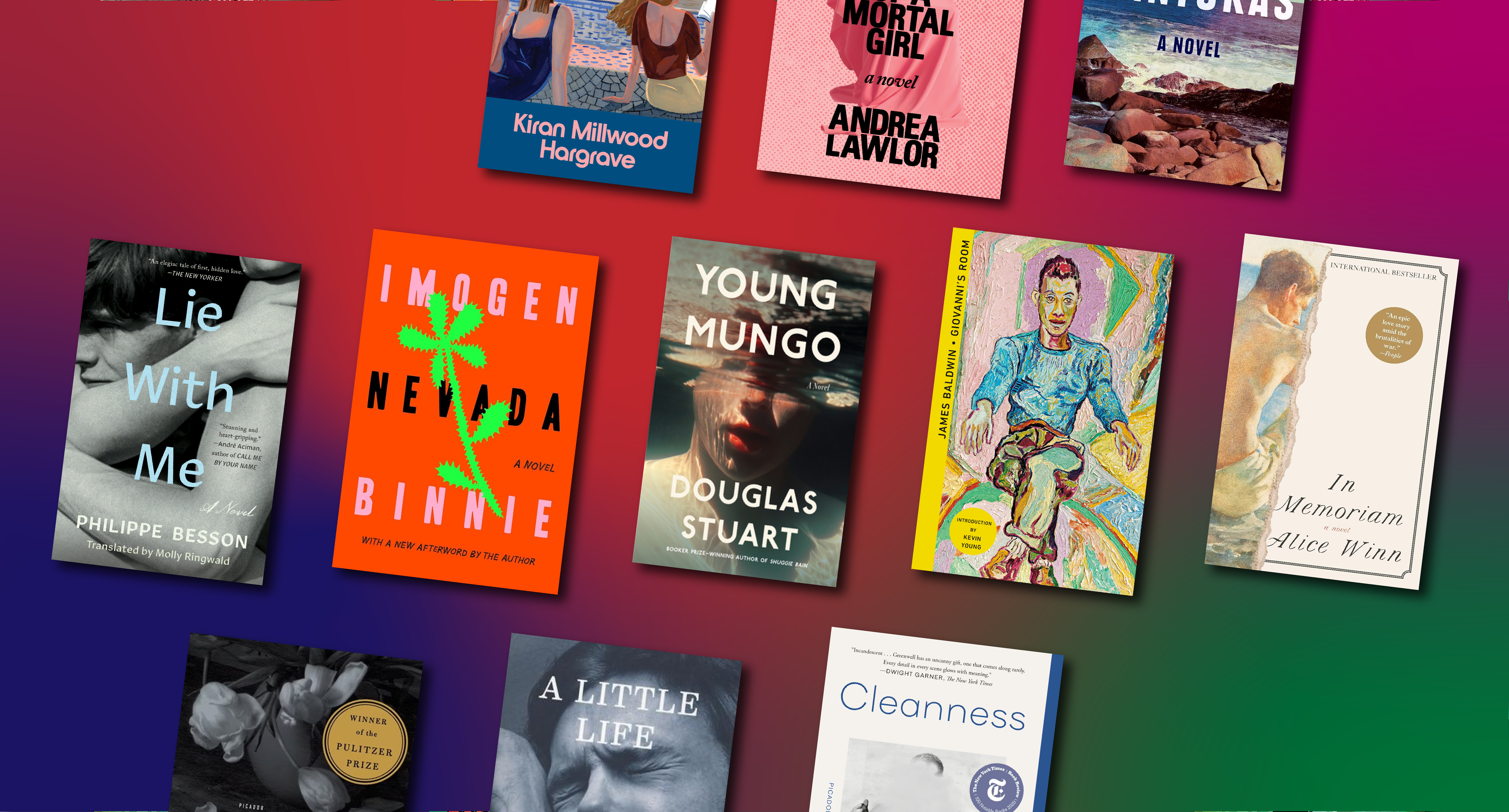
Giovanni’s Room by James Baldwin (1956)
Before there was a genre, there was this. Baldwin’s second novel follows an American man in Paris who falls into a devastating love affair with an Italian bartender while his girlfriend travels through Spain. Shame and self-deception steep every page. The tragedy doesn’t arrive from some external force punishing queerness. It comes from David’s own refusal to accept who he is. Giovanni pays for David’s cowardice with his life. Baldwin wrote this book as a Black man about white characters, specifically so American publishers couldn’t reduce it to a “race problem.” Seventy years on, it reads like it was written last week.
Best for: Readers who want the literary canon entry point. Readers who can handle a short book that will take up permanent residence in their chest.
Lie With Me by Philippe Besson (2017, English translation 2019)
Besson’s novel is short enough to read in a single sitting and devastating enough to occupy you for weeks afterward. A French writer in his forties spots a boy in a restaurant who looks exactly like the great love of his life, a boy he lost thirty years earlier in a small town in southwest France. What follows is part memory, part reckoning: a portrait of a first love between two teenage boys in 1984, when such love had no language, no permission, and no future anyone could imagine. Besson writes in close, almost unbearably intimate second person, a “you” addressed directly to the boy who was never fully his. The novel began as a roman à clef in France and found enormous success there before Molly Bloom’s English translation carried its precision to a wider readership. It does the thing the best queer fiction does: it makes the reader feel the specific weight of a love that had to stay secret, then asks what that silence costs across a lifetime.
Best for: Readers who want something short and surgical. Readers drawn to French literary fiction, to memory as form, and to the particular grief of first love between men who had no roadmap for it.
A Little Life by Hanya Yanagihara (2015)
This one has a reputation and it is entirely deserved. Four friends navigate New York across several decades, but the novel narrows relentlessly around Jude, a man whose history of childhood trauma shadows every page. Yanagihara does something with chosen family that no other contemporary novel matches: she shows the specific love that forms between queer people who become each other’s chosen kin. It is also one of the longest emotional endurance tests in modern literature. Read it. Take breaks. Have a plan for afterward.
Best for: Readers who want to understand why chosen family is a queer survival strategy, not just a theme. Readers who have already been warned and are going in anyway.
The Hours by Michael Cunningham (1998)
Three women. Three days. Three different decades. Cunningham weaves together Virginia Woolf in 1923, a 1950s housewife suffocating under her perfect life, and a book party in 1990s New York unfolding in the shadow of AIDS. The novel meditates on time and what we give up for the lives we choose. Clarissa Vaughan’s relationship with her dying friend Richard stands as one of the most quietly devastating portraits of grief and queer love in American fiction. New readers to literary queer fiction should start here. It’s short, structurally elegant, and completely merciless.
Best for: Literary fiction readers. Book clubs that want something they can actually finish in a month and still have a lot to say about.
Nevada by Imogen Binnie (2013)
Binnie originally self-published this novel, and trans communities passed it hand to hand like a sacred object for years before a wider reissue. It follows Maria, a trans woman in New York working a record store job and quietly falling apart, then across the country in a strange, tender road trip toward another person who might be trans and doesn’t know it yet. Binnie writes with a rawness that is genuinely funny and genuinely heartbreaking at the same time. This is the novel that taught a generation of trans readers what it felt like to be seen on the page.
Best for: Readers who want the interior life of a trans woman rendered with honesty rather than explanation. Readers who appreciate a lot of run-on sentences and internal monologue, because Binnie uses both to devastating effect.
Paul Takes the Form of a Mortal Girl by Andrea Lawlor (2017)
This one sits lighter in tone than most on this list, but the grief is still here, just worn differently. Paul is a queer shapeshifter, literally, moving through 1990s queer subcultures and sexual identities with a body that reflects his desires. The novel is lush, funny, and completely saturated in a specific era of queer community life. Reading it now, with knowledge of what the AIDS epidemic had already taken from those spaces, gives the whole thing a bittersweet register the book earns rather than announces.
Best for: Readers who want heartbreak served with literary camp. Readers who find queer theory more interesting when it’s visceral, strange, and actually fun to read.
Cleanness by Garth Greenwell (2020)
Greenwell’s follow-up to What Belongs to You reads as one long, sustained reckoning, though it arrives as a novel in linked stories. A gay American teacher in Sofia navigates desire, sadomasochism, and the slow dissolution of a relationship with extraordinary prose precision. The sentences run long and almost musical. The book asks hard questions about what we do to each other in intimacy, and what we owe. Nothing resolves cleanly. The title is ironic and also completely serious.
Best for: Readers who want queer literary fiction at the level of technical craft. Readers who are not looking for comfort and know it.
Cantoras by Carolina De Robertis (2019)
Five queer women in Uruguay gather in secret at a crumbling beach house during the military dictatorship. De Robertis tracks them across fifty years. This is a generational novel in the fullest sense: the story of what survives, what doesn’t, and how love persists under conditions that actively work to erase you. De Robertis writes about community and political violence with both warmth and fury. The novel spans enough time that readers watch these women age into themselves. It’s one of the most underread queer novels of the last decade, and one of the most essential.
Best for: Readers who want queer fiction in an international setting. Book clubs looking for something with political and historical dimension that doesn’t sacrifice intimacy.
In Memoriam by Alice Winn (2023)
Two boys at an English boarding school fall into orbit around each other in 1914, full of longing neither can name. Then the war arrives and names everything for them. Winn structures the novel around the school newspaper’s honor roll of the dead and wounded, and she returns to it again and again as the list grows. It is one of the most formally devastating choices in recent queer literary fiction. Gaunt and Ellwood fight for a country that would have arrested them for loving each other, and Winn holds that contradiction at the center of every page. The boarding school opening asks for patience. Push through it. The novel that opens up on the other side earns every page of the wait.
Best for: Readers who love historical queer fiction with real literary ambition. Readers who want the emotional register of The Song of Achilles but set in the mud and poetry of the First World War.
Young Mungo by Douglas Stuart (2022)
Stuart won the Booker Prize for Shuggie Bain, and Young Mungo is, if anything, more brutal and more tender in equal measure. Mungo Hamilton grows up in a Glasgow housing estate in the 1990s, caught between his Protestant community’s violent codes of masculinity and his love for James, a Catholic boy who keeps pigeons in a condemned building nearby. Stuart writes working-class Scottish poverty with the intimacy of someone who lived it, and the love between Mungo and James carries that same granular truth. The novel moves between two timelines: one tracking the doomed sweetness of the boys’ summer together, the other following Mungo on a fishing trip with two men his alcoholic mother barely knows. The dread in the second timeline is almost unbearable. Stuart doesn’t flinch, but he also never loses sight of the tenderness at the heart of the story. This is not a book that punishes queerness. It is a book about what the world costs queer boys who grow up where no one has language for what they are.
Best for: Readers who want class and queerness examined together without either flattening the other. Readers who can handle a high level of tension and do not need protecting from where it leads.
Almost Life by Kiran Millwood Hargrave (2026)
Erica and Laure meet on the steps of the Sacré-Coeur in Paris in the summer of 1978. They spend the next three decades orbiting each other across continents, marriages, and choices they can never fully take back. Kiran Millwood Hargrave, whose debut adult novel The Mercies hit number one on the Times bestseller list, delivers what may be her most assured book yet. It’s a decades-spanning love story about the lives we build instead of the ones we actually want. Readers have compared it to One Day, and the comparison is fair, but it undersells what Hargrave is doing here. One Day runs on structure. Almost Life runs on feeling. The historical and social grounding she gives the love story means that when Erica and Laure finally run out of time, it feels less like a literary device and more like something that actually happened to two real people who deserved better. The title means exactly what it says.
Best for: Readers who loved One Day and want the sapphic literary fiction equivalent. Readers who are prepared to feel the specific grief of a love story that keeps choosing the wrong moment.
Frequently Asked Questions: Emotionally Devastating Queer Fiction
What does “emotionally devastating” mean in the context of queer literature?
It describes queer fiction that earns its emotional weight through character depth, historical specificity, and narrative patience. These books don’t punish queer characters for existing or reach for shock value. The best emotionally devastating queer novels leave readers grief-stricken because the characters and their lives feel genuinely real.
Is emotionally devastating queer fiction the same as the Bury Your Gays trope?
No. Bury Your Gays describes the reflexive, structural punishment of queer characters in storytelling, usually through death, and usually without narrative justification. Emotionally devastating queer fiction earns its grief through story and character. Intention and craft make the difference. Does the queer character’s suffering serve the story, or does it satisfy a cultural expectation about what queer lives are allowed to look like?
What queer novels work well for book clubs that want emotional depth?
The Hours by Michael Cunningham, Cantoras by Carolina De Robertis, and Almost Life by Kiran Millwood Hargrave are all strong book club picks. Each is emotionally rich, historically grounded, and generates strong discussion about time, love, and queer community.
Are there queer novels that are devastating but not about death or AIDS?
Yes. Almost Life and A Little Life both centre on how people survive. The grief in each comes from time passing and choices accumulating, not from tragedy in the conventional sense. Nevada follows a character in crisis who is very much alive. Cleanness traces the end of a relationship. Devastation in queer fiction takes many forms.
What is the difference between Bury Your Gays and Dead Lesbian Syndrome?
Dead Lesbian Syndrome is a more specific term within the broader Bury Your Gays pattern. It names the disproportionate rate at which lesbian and bisexual female characters die in film and television, often immediately after a relationship milestone. Autostraddle tracked lesbian and bisexual characters across ended U.S. television series and found that 31% ended up dead, while only 10% received a happy ending.
A note worth closing on: Bury Your Gays isn’t just a film and television problem. It shaped queer publishing for most of the twentieth century, and you can still feel its shadow in the way certain literary gatekeepers talk about what constitutes a “serious” queer novel versus an “escapist” one. Devastation gets coded as literary. Joy gets called genre.
The books above earned their pain. But you should also read queer fiction that is joyful, funny, sexy, and weird, because that is equally what queer life looks like. Both kinds of story are true. The best ones are usually both at the same time.