

Published under the pseudonym Claire Morgan in 1952, Patricia Highsmith’s “The Price of Salt” stands as a groundbreaking work of lesbian literature and a timeless exploration of love in the face of societal norms. Adapted into the acclaimed film “Carol,” the novel is an exquisite journey into the complexities of desire, identity, and the pursuit of happiness.
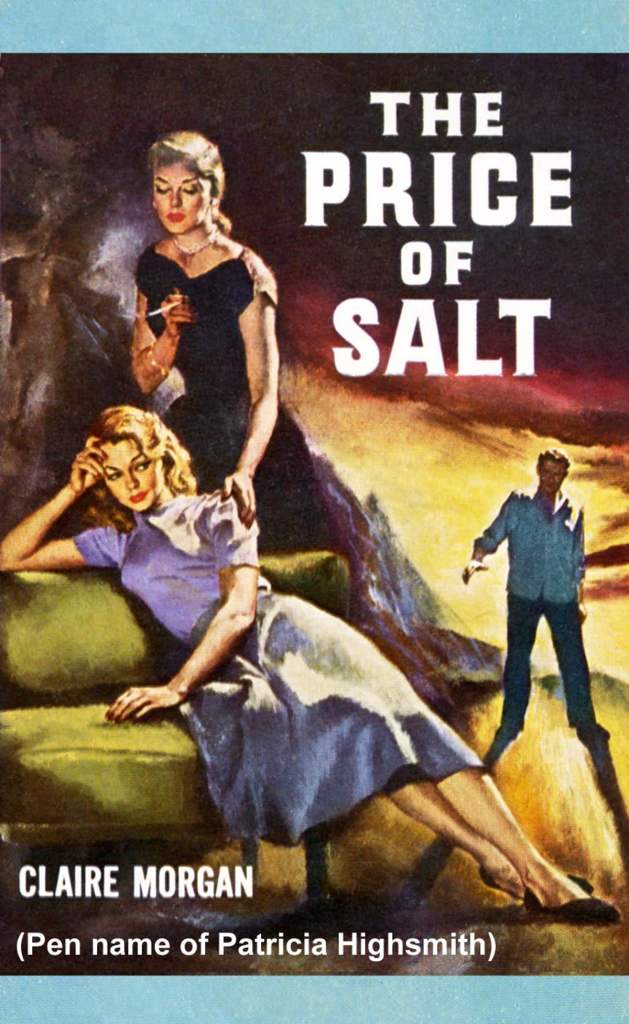

Set against the backdrop of 1950s New York City, “The Price of Salt” introduces us to Therese Belivet, a young and aspiring photographer working in a department store. Her life takes an unexpected turn when she encounters Carol Aird, an elegant and alluring woman trapped in a troubled marriage. What unfolds is a beautifully nuanced and illicit love affair that defies the conventions of the era.
Highsmith’s prose is a marvel, capturing the palpable tension between the two women and the magnetic pull they feel toward each other. The novel’s emotional depth is its crowning glory, as it allows readers to delve deep into the minds of Therese and Carol, experiencing their longings, fears, and, ultimately, their love.
The societal backdrop of the 1950s adds a layer of complexity to the narrative. Highsmith expertly portrays the era’s conservative norms, where same-sex relationships were heavily stigmatized and often met with rejection and scorn. Through Therese and Carol’s story, she shines a spotlight on the struggles faced by queer individuals during a time when their love had to be hidden, and their identities were constantly under threat.
Highsmith’s characters are beautifully drawn, with Therese’s quiet determination and Carol’s enigmatic allure making them unforgettable. Their relationship is a slow burn, a testament to the author’s ability to convey the subtle complexities of love and desire. The emotional intensity between Therese and Carol is both heartrending and inspiring, making their journey a timeless testament to the power of love.
“The Price of Salt” was groundbreaking not only for its portrayal of a same-sex love story but also for its groundbreaking ending, which offered a glimmer of hope in an era when tragic endings were more common in queer literature. The novel defied expectations and challenged the status quo, leaving readers with a sense of possibility and the belief that love could conquer all.
The adaptation of “The Price of Salt” into the film “Carol,” directed by Todd Haynes and starring Cate Blanchett and Rooney Mara, garnered widespread acclaim for its faithful and sensitive portrayal of the source material. The film’s success brought Highsmith’s novel to a new generation of readers and viewers, solidifying its status as a classic of LGBTQ+ literature.
“The Price of Salt” (Carol) by Patricia Highsmith is a timeless and trailblazing work of queer literature. It tells a story of forbidden love and the courage to defy societal expectations in pursuit of happiness. Highsmith’s lyrical prose and complex characters make this novel an enduring masterpiece that continues to resonate with readers, and its cinematic adaptation only adds to its legacy. This is a must-read for anyone who appreciates the power of love to transcend societal barriers and the enduring impact of groundbreaking LGBTQ+ literature.



 Queer Book Club